

When Should You Return to Exercise Postpartum? Here’s What Experts Recommend
Published:
Last updated:
Written by: Bailey McLagan, MS
Expert reviewers: Therabody Scientists: Brittany Leboeuf, MS, PhD; Tim Roberts, MSc; Rachelle Reed, PhD, MS, ACSM-EP
Expert contributors: Kristen Lettenberger, PT, DPT, CSCS of Bespoke Physical Therapy; Josh Adams, MS, CSCS of Therabody
New mothers are typically cleared to return to physical activity at their 6-week postpartum visit. More recent research shows that movement occurring sooner than the 6-week postpartum mark can help facilitate postpartum healing. [1]
Common guidance is that postpartum women should gradually increase intensity and duration of workouts, eventually aiming to reach 150 minutes of moderate-to-vigorous aerobic physical activity plus two strength training sessions each week. [1]
The key is to start slowly and build your way up.
In this article, we include a detailed guide on how and when to return to exercise postpartum, what to incorporate into your exercise routine, things to look out for, and special considerations to help you recover.

When to return to exercise postpartum
In the first few weeks after giving birth, light activity, like gentle walking and mobility, can support postpartum recovery. [1]
“Gentle mobility drills and stretches can really alleviate a lot of discomfort post labor and delivery as well as the demands of early postpartum,” notes Dr. Kristen Lettenberger, PT, DPT, CSCS.
Josh Adams, MS, CSCS, and Director of Education at Therabody® recommends, “Focus on an ‘inside-out’ approach when returning to regular physical activity. This means working on core strength and control first, then moving outwards to your upper and lower body.”
Return to exercise timelines are going to look different for every woman, depending on several factors including their pregnancy, birth, postpartum factors, and doctor’s recommendations.
Evidence suggests that an exercise timeline may look like the following. [2, 3]
Table 1: When to return to exercise postpartum [2, 3]
|
Time Postpartum |
Activities |
|
0-2 weeks |
|
|
3-4 weeks |
|
|
5-6 weeks |
|
|
7-12 weeks |
|
|
13+ weeks |
|
“Working with professionals, including pelvic floor physical therapists and certified exercise specialists should be leveraged postpartum,” recommends Dr. Lettenberger.
What exercises to include postpartum
As the body rebuilds and strengthens postpartum, easing back into exercise can support recovery. Here are key exercises to start with and why they matter.
Remember: A new exercise regimen that evolves with your body’s recovery can take time. Research shows that with appropriate progression and guidance, individuals can return to pre-pregnancy fitness levels and even exceed them. [4]

Incorporate core activation and breathing techniques
Rebuilding core strength and practicing deep breathing are important first steps in safely returning to exercise after giving birth. During pregnancy, your abdominal muscles stretch as your baby grows, and the deep core muscles that stabilize your spine and pelvis need time to reconnect and strengthen. Diaphragmatic (deep belly) breathing helps activate these deep core muscles.
"Inhale. As you exhale, lift your lower abs up to your rib cage, gently flattening and zippering up your core," explains Dr. Lettenberger.
Do this several times throughout the day. Once you feel comfortable with breathing exercises, progress to gentle movements like pelvic tilts and bent-knee fallouts, gradually building core strength from the inside out.
Strengthen the pelvic floor
Your pelvic floor is a group of muscles that support your bladder, bowel, and uterus. These muscles stretch and weaken during pregnancy and delivery. Restrengthening these muscles helps to improve symptoms you may experience postpartum, like urinary incontinence and pelvic organ prolapse. Supporting these muscles also helps stabilize your core, key as you return to exercise. [5]
Start with basic Kegel exercises. Gently squeeze and lift your pelvic floor muscles, hold for 3-4 seconds, then fully relax. Do 10 reps of Kegels three times per day.
If you experience pain, increased pressure, or incontinence during these exercises, consult a pelvic floor physical therapist.

Try low-impact exercises
Once you've worked on restrengthening your core and pelvic floor, low-impact exercises are next. Walking, stationary biking, and gentle yoga can support cardiovascular fitness and improve mood without excessively stressing your body as it heals.
Start with shorter durations (10-15 minutes) and gradually increase as you feel comfortable.
Pay attention to how your body responds and scale back if you experience bleeding, pelvic pressure, or discomfort.
Focus on lower-body strength
Strengthening your lower body, particularly your glutes, quadriceps, and hamstrings, is essential for postpartum recovery. These muscles support everyday postpartum activities like carrying your baby, standing up from the floor, and going up and down the stairs.
Stabilizing these muscles provides a foundation for returning to higher-impact activities like running, jumping, and weightlifting.
Start with 15-20 reps of bodyweight exercises like squats, lunges, glute bridges, and clamshells. Gradually add light weights, starting with 8-12 reps and working your way up to 15-20. Focus on controlled movements and core stabilization with each exercise.

What to look out for when returning to exercise postpartum
Before getting started with exercise postpartum, ensure you do not have any contraindications for exercise, using the Get Active Questionnaire for Postpartum. Results from this questionnaire can help guide your conversation with your healthcare provider about your readiness. [6]
It’s important to be aware of signs that you are pushing your body too hard too quickly. According to Dr. Lettenberger, that can look like:
- Increased bleeding after exercise
- Stitches coming out
- Incision sites re-opening
- Persistent musculoskeletal pain
- Incontinence with exercise
- Increased pressure or heaviness in the pelvic floor (a feeling that something might be falling out)
These are all signs to stop activity and seek guidance from your healthcare provider immediately. Check in regularly with your healthcare provider about your progress and adjust your workouts as needed.
Tips to ease soreness and improve posture postpartum
Getting back into exercise postpartum supports healing and proper recovery from exercise and other physical demands is critical.
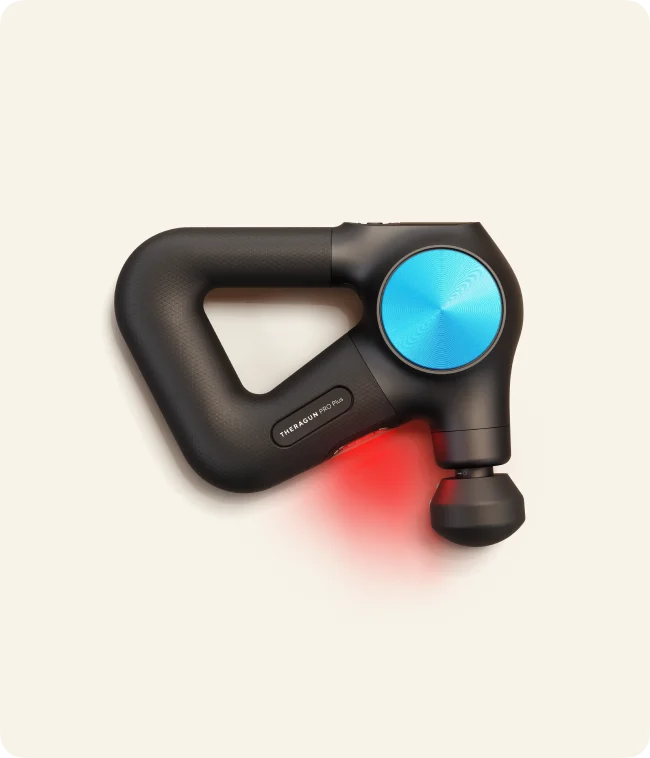
Therabody’s app includes three Theragun percussive massage therapy routines, created by experts and designed for those navigating parenthood. “We feel strongly about helping to support mothers’ wellness as they recover,” says Adams. “Mothers have an incredible journey from conception to childbirth and beyond, and Therabody provides science-backed education and actionable solutions for their unique needs.”
Here are three routines in the Therabody app that support postpartum posture, lower body muscles, hips, and the lower back.

1. Post-Pregnancy Posture Routine
Pregnancy and caring for a newborn can affect posture. The body attempts to compensate for a shifting center of mass, leading to a forward head posture, rounded shoulders, and increased curvature of the upper back. [7]
The post-pregnancy posture routine improves mobility in the areas that hold tension while carrying a baby, such as the chest, shoulders, and neck, while stabilizing and strengthening the upper back and shoulders for ideal posture.
2. Post-Pregnancy Lower Body Relief Routine
During pregnancy, the hip and pelvis positions shift to accommodate the growing baby. This can result in muscle and joint discomfort that lasts even after delivery.
The lower-body relief routine focuses on easing pain and tension in the legs and lower back, improving lower-body mobility, and supporting stability and strength.
3. Post-Pregnancy Hip and Lower Back Relief Routine
The lower back and hips bear significant strain during pregnancy and postpartum. As your center of gravity shifts forward with a growing belly, the lower back compensates with increased curvature. These changes, combined with the physical demands of lifting and carrying a baby, can lead to persistent discomfort.
The hip and lower back relief routine eases tension in these areas while focusing on core stability and lower body strengthening to support daily movement postpartum.

Key takeaways:
- New mothers are typically cleared to return to physical activity at their 6-week postpartum visit, but starting sooner may help facilitate postpartum healing
- In the first few weeks postpartum, start core breathing and light pelvic floor work to strengthen your muscles before easing into additional activities
- Gradually progress from low-impact activity to bodyweight to weighted exercises over 12+ weeks postpartum
- If you’re experiencing warning signs like bleeding, incontinence, or pelvic pressure during exercise postpartum, contact your healthcare provider
- Consult healthcare providers and pelvic floor specialists for safe postpartum exercise progression
References:
- DEFYING TRADITION: RETURN TO SPORT AFTER CHILDBIRTH
- Maximizing Recovery in the Postpartum Period: A Timeline for Rehabilitation from Pregnancy through Return to Sport
- Returning to running postnatal – guidelines for medical, health and fitness professionals managing this population
- Return to Running for Postpartum Elite and Subelite Athletes
- Pelvic floor injury during vaginal birth is life-altering and preventable: what can we do about it?
- Exercise After Pregnancy
- The Main Changes in Pregnancy—Therapeutic Approach to Musculoskeletal Pain