

New Study: Theragun Protocols That Power Lower-Body Isometric and Explosive Strength
Published:
Authors: Dr. Lorna Sams, PhD; Prof. Joan Simons, PFHEA; Dr. Jitka Vseteckova, PhD; Dr. Ben Langdown, PhD
Reviewed by Therabody Scientists: Tim Roberts, MSc; Rachelle Reed, PhD, MS, ACSM-EP
A new study from The Open University shows that spending just four minutes using a massage gun on each leg three times a week can increase lower-body isometric strength by an average of 10.1% and explosive strength by an average of 3.2% depending on the protocol used. [1]
Isometric strength is the force your muscles can produce without changing length, like holding a squat. Explosive strength is how quickly you can produce force, like jumping or sprinting. They’re important for sports performance and functional independence. Strong, powerful muscles help you perform everyday activities such as getting up from a chair, climbing stairs, lifting and carrying groceries, and maintaining balance.
Whether your activities include walking, running, jumping, lunging, squatting, or sport- and exercise-specific movements, lower-body isometric strength and explosive strength can influence how effectively and efficiently you move and perform.
Research suggests that using a massage gun for just a few minutes may help improve strength and explosive strength. [2] Importantly, studies are looking beyond whether massage guns work to understand the best treatment protocol — speed, duration, and frequency — to maximize performance benefits. [3]
This article dives into a new study from The Open University on how to use a Theragun® to power lower-body isometric and explosive strength.

Why do people use massage guns?
Both athletes and active people use massage guns before, during, and after workouts. Massage guns use percussive therapy, which delivers rapid, concentrated pulses or vibrations to provide a relaxing yet deep massage. [2]
Studies show that percussive therapy effectively stimulates blood flow, relaxes tight muscles, and promotes overall muscle recovery. It can also increase isometric and explosive strength, important for physical function, quality of life, and athletic performance where endurance, speed, jumping, and striking are needed. [3, 4, 5]
Using a massage gun pre-workout may support physical performance, but how the device is used is just as important. Applying the right protocol can help maximize specific performance outcomes.
Now, clinicians, athletes, coaches, and active people can use research-informed massage gun treatment protocols that target lower-body isometric and explosive strength.
What did the new study aim to find?
The research explored three key questions:
- Which massage gun speed setting produced the greatest improvements in lower-body isometric and explosive strength?
- Is progressively increasing the massage gun speed across a week more effective than using the same speed across treatments?
- How often should someone use a massage gun each week to increase isometric and explosive strength?
To investigate these questions, the study compared eight different treatment protocols combining three speed settings, 1750, 2100, and 2400 revolutions per minute (rpm), with different weekly treatment frequencies of one, two, or three sessions. [1] The Theragun Pro was used to deliver all massage gun treatments.
Treatments were applied to four major lower-body muscle groups responsible for generating force and explosive movement: the quadriceps, gluteals, hamstrings, and calves.
Lower-body isometric strength was assessed using a handheld dynamometer, and explosive strength was assessed using a countermovement jump and a mobile application. Measurements were collected before and after the Theragun treatment sessions.

How was the study conducted?
A total of 35 healthy adults not experiencing musculoskeletal pain or injuries took part in the study (29 female and 6 male). The average age of participants was 48 years and ranged from 19 to 75 years.
Two main treatment plans were used: a consistent speed plan where the Theragun was set at 2100 rpm or an incremental speed, where the speed increased each session during the week.
Participants were divided into two groups. Half completed the consistent speed protocol during week one and the incremental-speed protocol during week three, while the remaining participants followed the protocols in the opposite order. Week two served as a washout period, during which participants did not use the Theragun. Throughout the study, participants maintained their usual daily activities and exercise routines.
Eight different treatment plans were compared:
- Plan 1: Session 1 - 2100 rpm; Session 2 - 2100 rpm; Session 3 - 2100 rpm
- Plan 2: Session 1- 2100 rpm
- Plan 3: Session 1 - 2100 rpm; Session 2 - 2100 rpm
- Plan 4: Session 1 - 1750 rpm; Session 2 - 2100 rpm; Session 3 - 2400 rpm
- Plan 5: Session 1 - 1750 rpm
- Plan 6: Session 1 - 2400 rpm
- Plan 7: Session 1 - 1750 rpm; Session 2 - 2100 rpm
- Plan 8: Session 1 - 2100 rpm; Session 2 - 2400 rpm
Each session started with a brief, standardized pulse-raising and mobility warm-up before participants completed tests of lower-body strength and explosive muscle strength. These assessments were repeated after treatment to determine the immediate effects of the massage gun protocol.
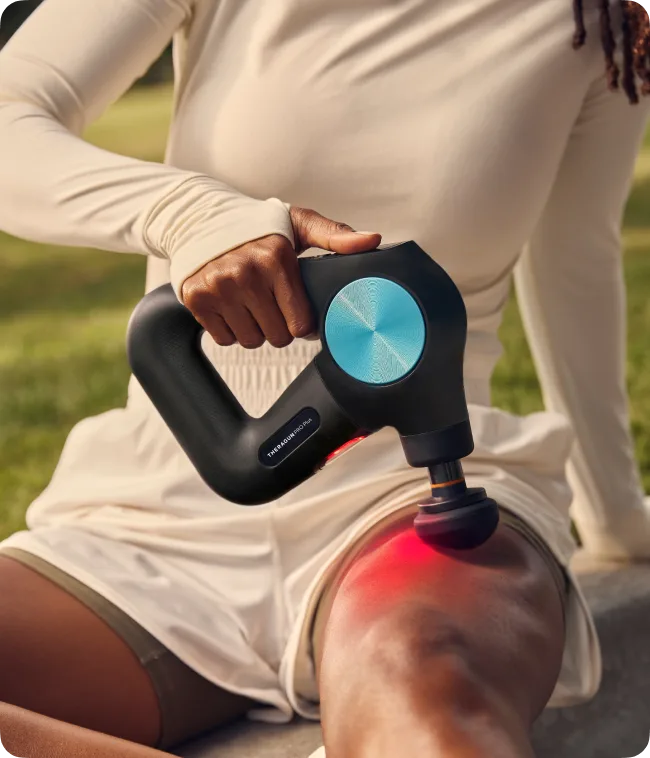
Participants self-applied the Theragun Pro at a maximum pressure they could tolerate to the quadriceps, gluteals, hamstrings, and calves of both legs, treating each muscle group for 60 seconds.

Which plans offered the greatest benefit?
Lower-body isometric strength
Plan 4 — Three Theragun treatments per week, with incrementally increasing speeds across sessions: 1750 rpm, 2100 rpm, and 2400 rpm.
Incrementally increasing percussive massage therapy speed across three weekly sessions was associated with the biggest improvement — on average, a 10.1% increase in isometric strength — of all eight assessed protocols. Using a massage gun effectively increased isometric strength on both the dominant and non-dominant sides.
The incremental protocol provides a practical progressive approach that targets lower-body isometric strength.
The study authors note that assessment timing may have contributed to these findings. Assessments were taken approximately 5–10 minutes after treatment, and previous research reports a delayed physiological response (e.g., increased blood flow to the muscle) following massage gun percussive therapy. [6]
Explosive strength
Plan 1 — Three Theragun treatments per week, with consistent speeds at each session (2100 rpm)
Maintaining a consistent speed across the three percussive massage treatment sessions was associated with the biggest improvement — a 3.2% increase in explosive strength — of all eight protocols. Protocols that included only a single Theragun session per week did not significantly increase explosive strength.
How should a massage gun be used for lower-body isometric and explosive strength?
The results suggest the most favorable approach for improving lower-body isometric and explosive strength is using a massage gun on both legs for 60 seconds per muscle group three times a week.
For isometric strength, increase massage gun speed at each session, with a rest day in between. When explosive strength is the priority, maintain a consistent massage gun speed across each session.
Key takeaways:
- This study identifies the most effective of the eight massage gun protocols for increasing lower-body isometric and explosive strength.
- For lower-body isometric strength, increasing the speed across three weekly sessions, from 1750 to 2100 to 2400 rpm, was associated with average isometric strength increases of 10.1%.
- Using a Theragun three times a week at 2100 rpm was associated with a 3.2% increase in explosive strength.
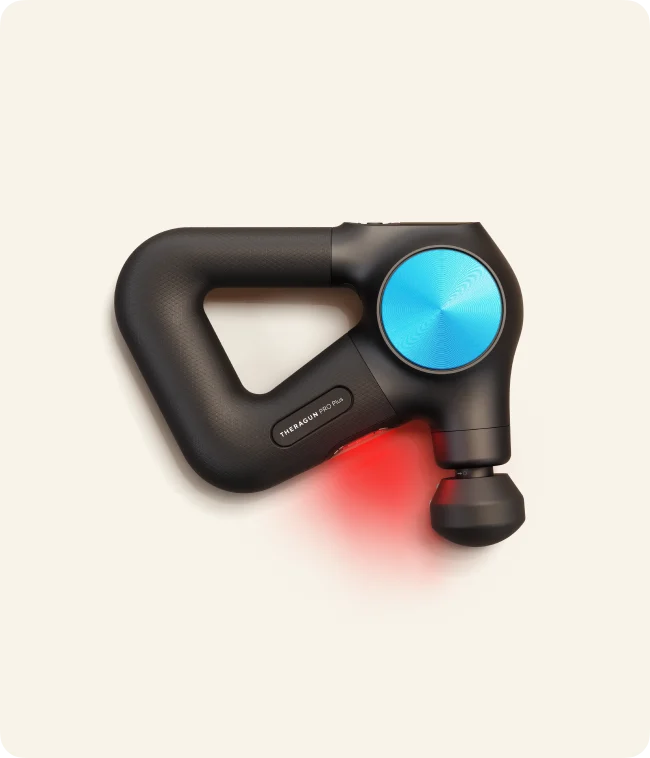
- Use the Theragun Pro for 60 seconds on both quadriceps, gluteals, hamstrings, and calves, at a maximum tolerable pressure.
- Further research is needed to assess the benefits of longer-term protocol adherence.
Want to learn more? The Open University’s free OpenLearn platform offers a wide range of resources through its Sport and Fitness Hub, with related topics and short courses covering sport, fitness, exercise, and health:
- Recovery strategies in sport and exercise
- The Pain Clinic: Podcast
- Promoting the effective management of children's pain (free course)
- Exploring the psychological aspects of sport injury
- Supporting female performance in sport and fitness
- Exploring issues in women's health
- Sport and fitness courses (qualifications including degree pathways)
- Ageing Well Collection
References:
- The impact of protocol designs for using massage guns on countermovement jump performance and lower body isometric strength: A randomised cross-over design study
- The effect of percussive therapy on musculoskeletal performance and experiences of pain: A Systematic Literature Review
- The impact of protocol designs for using massage guns on lower body flexibility: A randomised cross-over design study
- Effectiveness of power training compared to strength training in older adults: a systematic review and meta-analysis
- Differences in Explosive Strength in Athletics and Various Sports: A Systematic Review.
- Blood flow response and changes in fluid distributions after percussive massage therapy
Related products
-
 Sold out Sale
-
 Sold out Sale
-
 Sold out Sale