

Jaw Pain: Common Causes and Evidence-Based Strategies for At-Home Pain Relief
Published:
Reviewed by Therabody Scientists: Tim Roberts, MSc; Rachelle Reed, PhD, MS, ACSM-EP
Expert contributor: Dr. Dan Giordano, DPT, Scientific Advisory Board Member
Have you ever woken up with a tight or tender jaw, felt a dull ache near your ears after a long day of meetings, or noticed your temples throbbing after too much screen time? Or maybe you’re prompted to “relax your jaw,” but didn’t realize you were clenching in the first place?
Jaw pain and tension have become increasingly common, with an estimated 11.8 million adults in the United States experiencing facial pain. [1]
Between work pressure, endless streams of notifications, and unintentionally clenching or grinding, your jaw muscles take a daily beating. Triggered by stress, nagging jaw pain has a way of flaring up at the most inconvenient times. [2]
This article covers common causes of jaw pain and the science-backed strategies experts recommend for at-home relief.

What causes jaw pain and tension?
Jaw pain occurs in the chewing muscles, particularly the masseter muscles along the sides of the jaw and the temporalis muscles around the temple. Pain can flare up when these muscles are overworked, irritated, or tense. Clenching, grinding, stress, excessive chewing, or an issue involving the temporomandibular joint itself, commonly called the TMJ, can lead to jaw pain and tension. [2]
The muscles and nerves of the jaw, head, and neck don’t work in isolation; they are closely connected. That’s why jaw pain can often lead to symptoms around the temples, face, neck, or head, leading to neck pain and tension headaches if left untreated. [2]
How to relieve jaw tension at home
There are several ways to manage jaw pain at home. According to Therabody® Scientific Advisor and Physical Therapist Dan Giordano, DPT, some of the most effective treatments combine approaches to manage and prevent jaw pain.
“A major clinical practice guideline published in the British Medical Journal strongly recommends several approaches. Evidence-based strategies include jaw mobility, stretching, controlled exercise, manual therapy and trigger point treatment, neck and postural strengthening, education and home exercise programs, and addressing behaviors such as clenching and stress management.” [2]
Here, we’ll break them down.
Gently massage your masseter and temporalis muscles
A jaw pain management technique includes gently massaging the jaw and surrounding muscles. Find your masseter muscle, the large chewing muscle along the side of your jaw, and gently clench your teeth to feel it contract. [3]
Perform the following routine:
- Relax your jaw and separate your teeth
- Place two fingertips over the muscle
- Apply gentle pressure and make small circular motions
- Spend ~30 seconds working slowly over the area
- Repeat this over the temporalis muscle, which is slightly in front of your ear
The key here is to massage gently to help decrease tension and sensitivity, without further irritating the area.
Incorporate recovery tools
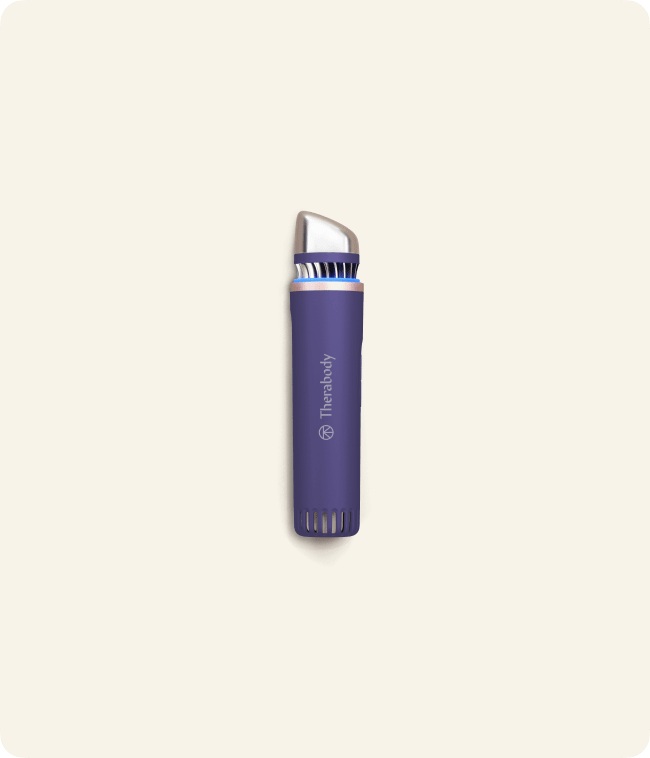
Giordano recommends using TheraFace® PRO, which delivers gentle heat and a percussive massage to the facial muscles to help relax and reduce tension. Heat and percussive massage can help relax tight muscles, improve circulation, and temporarily reduce discomfort. [3, 4]
“For someone whose jaw pain is primarily due to muscular tension, TheraFace Pro is a tool that may help decrease tension and discomfort, relieve pain, and promote the healing process,” says Giordano.
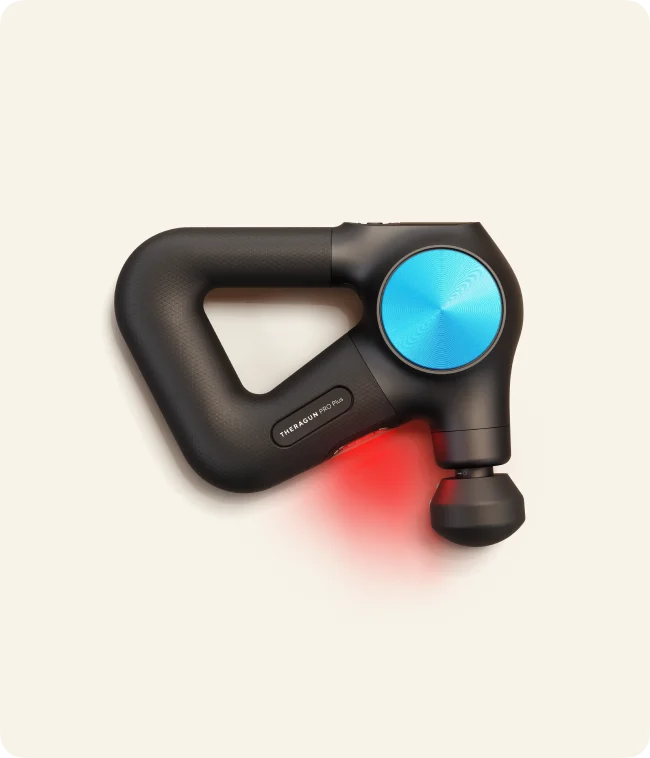
Jaw tension that leads to a sore neck and upper back can be treated with a Theragun for tension relief. [5]

Prioritize movement throughout your day
If you're leaning towards a computer for eight hours a day, looking down at your phone, or clenching your jaw while in the zone or stressed, you're placing sustained tension on the neck, shoulders, head, and jaw. Long periods in one position, combined with stress, jaw clenching, and a lack of movement, can contribute to head, neck, and jaw tension. [3]
According to Giordano, while neck and jaw pain are connected, poor posture doesn’t directly “cause” jaw pain.
Physical activity and movement can help manage jaw pain. Try to regularly change positions, move your neck and shoulders, and take breaks away from your phone and computer. Staying physically active helps build strength through your neck and shoulders. [3]
Related read: What Is Tech Neck? Causes, Symptoms, and Science-Backed Ways to Find Relief.
Implement stress management techniques
Incorporating stress management into your daily routine can help you get ahead of and alleviate some jaw pain. Science-backed tips include: [6]
- Take slow, controlled deep breaths: Inhale for four seconds and slowly exhale for four seconds. Repeat for a few minutes.
- Check in on your jaw: Periodically throughout your workday, remind yourself: lips together, teeth apart, jaw relaxed.
- Break up your day with movement: Take a break from your computer to gently roll out your neck, shoulders, and upper back.
- Exercise consistently: Getting regular movement throughout the day is one of the best overall tools for managing stress.
- Prioritize quality sleep: Don't overlook the cheapest recovery out there. Poor sleep increases stress levels and can affect how we perceive pain.
- Build a wind-down routine: This can include deep breathing, yoga, mobility, reading, meditation, and other activities such as using LED light therapy or compression boots to decrease stimulation and prepare you for bed.
- Try relaxation and recovery tools: The relaxation tool SmartGoggles® delivers gentle heat and vibration around the eyes and temples and has been shown to reduce stress when used before bed. [7] Similarly, using a Theragun® for a few minutes before bed has been shown to help improve how long it takes to fall asleep.
Related read: Therabody SmartGoggles Improves Sleep, According to New Study

What steps can you take to prevent jaw pain?
The same strategies used to help relieve jaw pain can also help prevent it from occurring. [2]
Focus on reducing the total daily load placed on your jaw muscles by:
- Limiting time spent in the same static position
- Making workspace and routine adjustments
- Practicing stress management techniques
- Checking in on your jaw position
- Staying consistent with gentle mobility and awareness
“The big picture approach is to decrease jaw irritation and pain, then restore comfortable movement. Address the neck and surrounding muscles, reduce unnecessary clenching and stress, strengthen and gradually build tolerance, and create long-term change,” concludes Giordano.
Key takeaways:
- Jaw pain is primarily driven by overworked masseter and temporalis muscles from clenching, grinding, or stress.
- Evidence-based care, including jaw exercises, manual therapy, postural strengthening, exercise, and reducing clenching, is recommended for most muscular jaw pain.
- Effective at-home strategies to relieve jaw pain include gentle jaw mobility exercises, self-massage, neck strengthening, heat, breathing techniques, movement breaks, and maintaining the resting position of lips together with teeth apart.
- If jaw pain is persistent or worsening, the jaw is repeatedly locking, you're experiencing difficulty opening or closing your mouth, symptoms started after trauma, or there are unusual neurological or other symptoms, consult with a healthcare professional.
References
- A Meta-Analysis of the Global Prevalence of Temporomandibular Disorders
- Management of chronic pain associated with temporomandibular disorders: a clinical practice guideline
- Physiotherapy Approaches for Temporomandibular Disorders: A Multimodal Conservative Management Strategy
- Consensus on the Use of Therapeutic Interventions in Pain Management, Recovery, and Athletic Performance: A Delphi Study
- Jaw Dysfunction Is Associated with Neck Disability and Muscle Tenderness in Subjects with and without Chronic Temporomandibular Disorders
- Stress Management
- Effects of Smart Goggles Used at Bedtime on Objectively Measured Sleep and Self-Reported Anxiety, Stress, and Relaxation: Pre-Post Pilot Study

Related products
-

 Sold out Sale